

Trading Beauty For Ashes
No.280: January 9, 2025

Welcome to The Square Inch, a weekly newsletter on Christianity, culture, and all of the many-varied “square inches” of God’s domain. This is a paid subscription feature with a preview before the paywall (but this one’s on the house), so please consider subscribing to enjoy this weekly missive along with a frequent Pipe & Dram feature of little monologues/conversations in my study, and Wednesday’s “The Quarter Inch,” a mid-week note on current events.
Dear Friends,
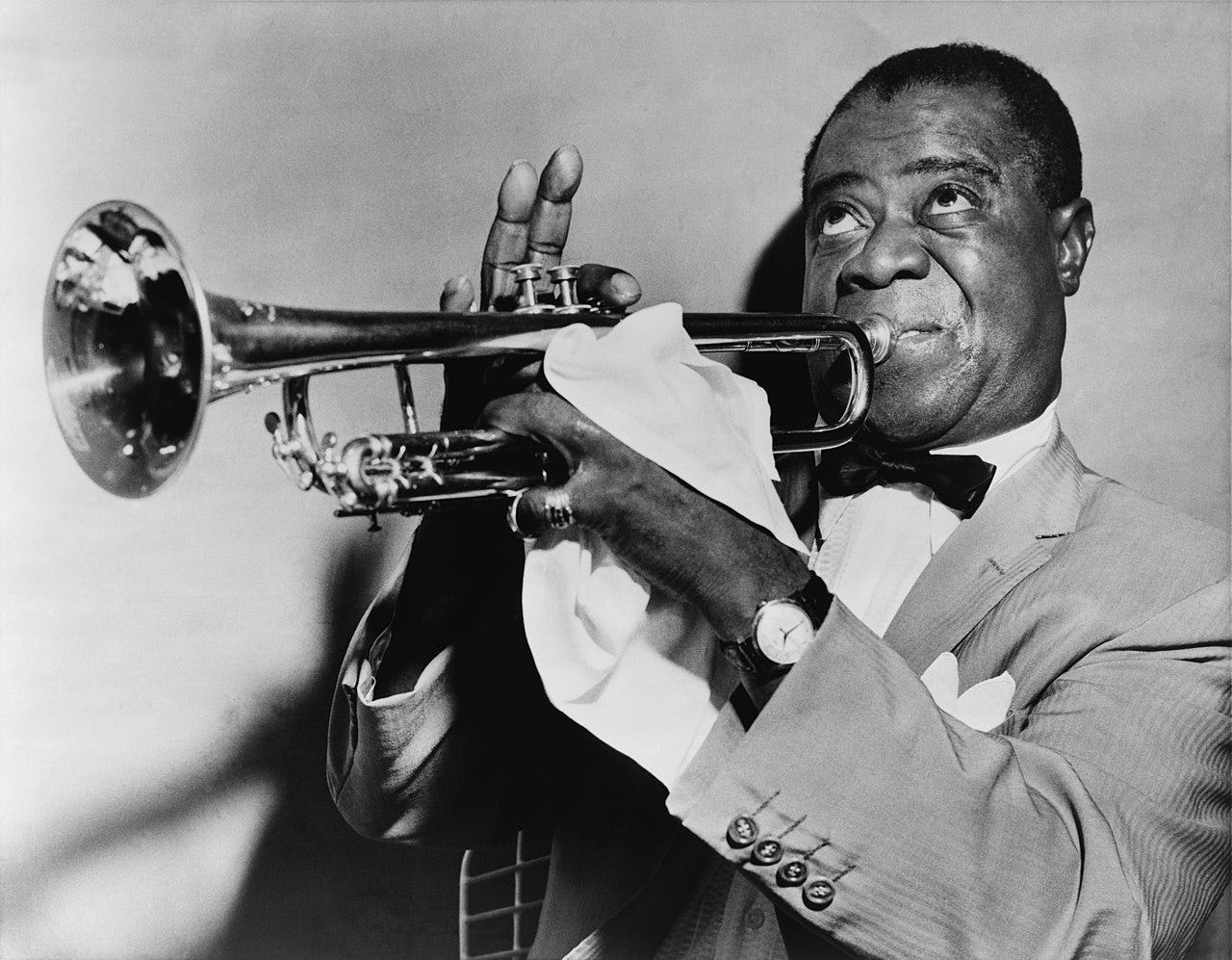
The other night I started watching the Ken Burns documentary on the history of jazz music. I did not grow up a fan of jazz at all. I used to claim to “hate” jazz. But I am not embarrassed to admit that over the past few years it has grown on me—profoundly so.
Anyway, as Mr. Burns is wont to do, he has made a documentary about a cultural phenomenon and decided to tell it as a window into the soul of America. This is what he did with Baseball, for example. It wasn’t just about the sport and its history; it was about America: its failures, its tensions, its promise, and its victories. Now he applies the same storytelling method with music, which, it turns out, is even more ripe for national self-reflection.
Jazz music is an American invention (actually, accident), and—as the narrator and interviewees unanimously insist—it is the kind of music that only could have emerged in America. No America? No jazz. It really is that simple. No other nation or culture ever had the diversity to form this kind of alchemic unity.
But it isn’t just that America is the sort of “melting pot” or “gumbo” (as Wynton Marsalis calls it) where different streams of music suddenly collided on the streets of New Orleans in the 19th century. It is also that the kinds of music that collided were themselves already shaped by the American experience. When the musical alchemy that became jazz happened, it was a confluence not just of ethnic music from Europe, Africa, and South America; it was all music refracted through American experience. Former slaves brought work songs and call-and-response spirituals; Civil War vets brought brass marching music; Creoles (half black and half-white by way of their West Indies slave masters) brought European chamber music (they identified as white, and were keen to maintain that impression); and then there were the itinerant troubadour bluesmen from the Mississippi Delta bringing their twelve bars and howls and wails.
All of this was crammed together in one place. All of these people living elbow to elbow in the tenements of unsegregated New Orleans. They learned to live together in symbiosis, and the music that emerged uniquely reflected it. Jazz is all of these things: call-and-response, brass bands, chamber orchestras with clarinets, and underneath it all, the blues. And it is no accident that a musical art form created mainly by American blacks is about freedom. Creativity and self-expression, yet contained in a structure of give-and-take, an “I” and a “Thou,” a “my turn” and “your turn.” Jazz is, as an objective matter, metaphysically beautiful.
And yet so much of it is formed by suffering. The most beautiful things are. That doesn’t mean we go searching for suffering or torture ourselves for “art,” as so many poets try to do. It means noticing in wonder and gratitude that the world is such that beauty can emerge even from ashes, that after suffering is glory, after the cross comes resurrection. As Herman Bavinck observed, God made the world in such a way that even should it stray, it could be brought back; even if it should fall, it could be lifted; even if it went wrong, it could be righted again. And the “having-gone-through-suffering” makes the final result all the more glorious than it would have been. As Saint Paul put it, what if God ultimately (and mysteriously) planned the darkness as a better backdrop to display the “riches of his glory” to the objects of his mercy? (Rom. 9:23)
Slave music was born in extremis , obviously, but the Delta blues came out of post-war Reconstruction and the despair of so many free men who weren’t yet really free. And consider the Creoles: most of the American south went straight from slavery to Jim Crow-style segregation. New Orleans was unsegregated until 1902. Only forty-odd years after the Civil War was the city segregated and subjected to Jim Crow laws. Talk about injustice! Suddenly, the powers-that-be considered the Creole to be black, when they’d always considered themselves white. They were classical musicians playing European classical chamber music. Suddenly, they were barred from white society. All that was left for them was to play music with the rest of the rabble—the rag-timers and brass bands and bluesmen. And out of that social injustice and suffering, ladies and gentlemen, is how you got the “Big Band.” Ever wonder how clarinets and oboes got put into what is essentially a big brass marching band? It wasn’t Duke Ellington’s or Louis Armstrong’s idea. That was the blossom that providentially bloomed out of the suffering of Jim Crow.
Why am I telling you this? Because as I consider it all I become somewhat despondent for my country in her 250th year. After all we’ve been through, after all the suffering, after all we’ve created, after all we’ve accomplished, after all the slow and painful progress that we have made living up not just to the promise of our founding Declaration, but even the promise intrinsic to our own unique cultural artifacts—baseball and jazz, for example, which at their best speak of things transcendent: unity and diversity, ordered freedom, self-expression and self-deprecation (such as homers and sacrifice bunts and “my turn” and “your turn” trumpet and clarinet solos)—we seem hell-bent on tearing it all apart and trampling it underfoot.
We dare not ask the Lord for the ashes back. He might give them.
It was only twenty years ago that a dear professor of mine, hailing from Northern Ireland, told me that the one thing he really couldn’t get his head around about America as he experienced it was its racial harmony. Coming from the land of “The Troubles,” he couldn’t grasp or explain how integrated and peaceful American life was with all its diversity. I was dumbstruck. Because it had never really occurred to me how unbelievably unique we are. That was twenty years ago, but it seems like it might as well have been forever.
I could write a book on the corrosiveness and destructiveness of “woke” Leftist Identity Politics which can find racial oppression and foment victimhood, bitterness, and division over a thumb tack. I could also write a book on the corrosiveness and destructiveness of Right-wing Identity Politics that speaks of so-called “heritage” Americans and coddles outright racists and antisemites and is currently drunk on the power of deporting icky foreigners. I will spare you.
What I am in the mind to do this year, Anno Domini 2026, the 250th Anniversary of the birth of our exceptional nation, is to periodically write essays on America. What I love about her. What is great and beautiful and precious about her. Because our civil society, our shared space, is being squeezed from both sides by revolutionaries and radicals, professional outrage entrepreneurs and unscrupulous grifters. Honestly, people who say with their lips that they love America, even make slogans about how much they love America, but in their hearts they hate America and they hate what God, in his providence, has made of America. They want to trade in the beauty and go back to ashes.
I plan to stand athwart, yelling “Stop!”
Thank you for reading The Square Inch Newsletter. Have a wonderful weekend!
Looking forward to your essays. Assume you've been listening to Charlie Cooke's podcasts on that topic?
The Jazz doc is magnificent. (Burns's newest one on the revolution is also very good).
So good!